
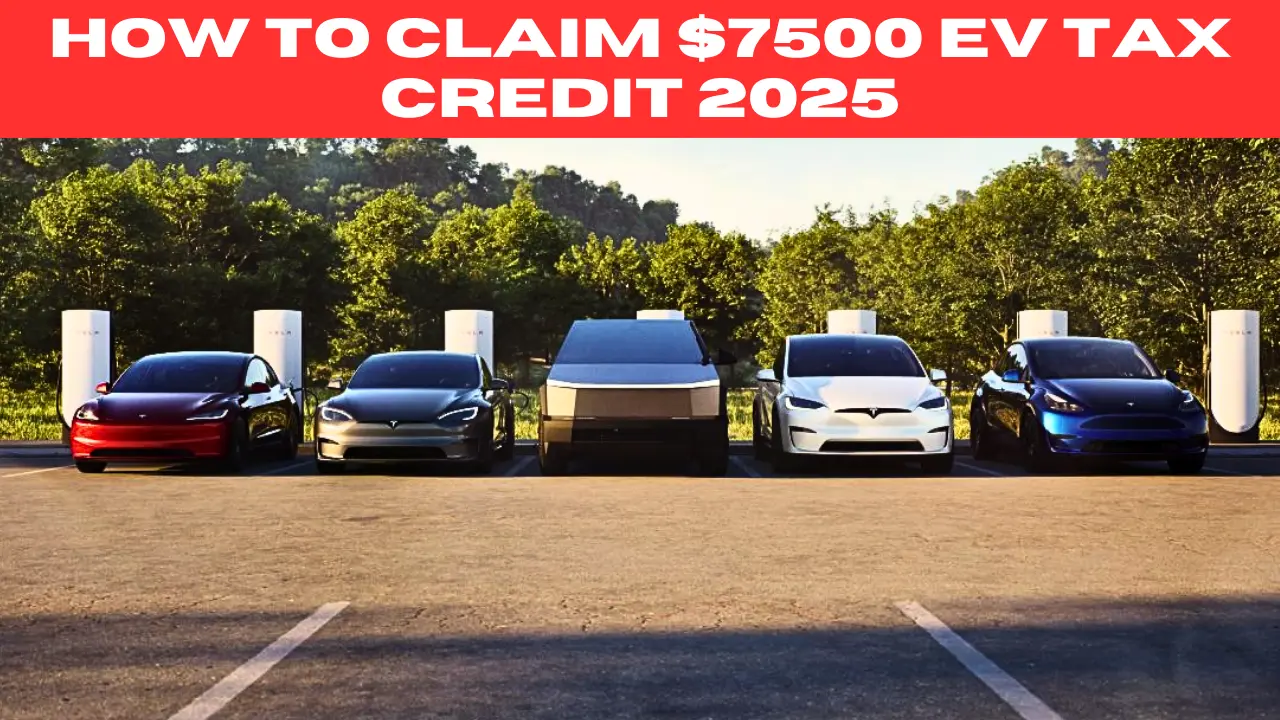
The current U.S. federal electric vehicle (EV) tax credit of up to £7,500 (~$7,500) offers significant savings, particularly through a popular leasing loophole that allows lessees to claim the full credit without meeting standard income or manufacturing requirements. This loophole treats leased EVs as commercial purchases, exempting them from many restrictions that apply to outright buyers, thus enabling dealers to apply the credit to nearly any EV and pass the savings on to lessees. This has contributed to a sharp rise in EV leasing popularity—from about 15% in 2022 to 67% by March 2025.
However, this favourable environment for EV rebates is set to end soon. The federal tax credit is scheduled to expire on 30 September 2025 as part of the “One Big Beautiful Bill Act” (OBBBA) signed into law in July 2025. After this date, no federal tax credits will be available for new or used EVs, regardless of purchase or lease, effectively closing the leasing loophole.
For outright purchasers, qualifying for the full credit requires adherence to several stringent criteria including:
- Final assembly of the vehicle in North America (U.S., Canada, or Mexico); leasing bypasses this requirement.
- Battery material sourcing: at least 60% of critical minerals for $3,750 of the credit must be recycled or sourced from the U.S. or free-trade partners.
- Battery component manufacturing: at least 60% completed in the U.S. or free-trade partners.
- Exclusion from sourcing materials from “foreign entities of concern,” notably China, Iran, North Korea, and Russia.
- MSRP price caps: £55,000 for cars, £80,000 for SUVs/trucks/vans (exclusive of taxes and fees).
- Buyer income limits (MAGI), scaling between £150,000 and £300,000, depending on tax status.
Used EV buyers qualify for a smaller credit (up to £4,000), subject to different and looser requirements (no assembly/battery sourcing, price caps at £25,000, income limits of £75,000 to £150,000, and other conditions).
When leasing, users gain benefits such as lower monthly payments, reduced upfront costs, warranty coverage through the term, and flexibility to upgrade. Drawbacks include no ownership equity, mileage limits, wear-and-tear charges, and restrictions on modifications.
Buyers must claim credits either via their tax return (non-refundable credit) or by transferring the credit to the dealer for an upfront price reduction, with proper documentation (IRS form 8936). It is important to verify income eligibility carefully to avoid repayment obligations.
Complementary incentives exist for EV charger installation (30% credit up to £1,000 for homes; up to £30,000 for businesses), as well as various state and local benefits like rebates, reduced fees, and carpool lane access.
In summary, while leasing remains a powerful strategy to maximize savings under current EV tax credit rules thanks to the leasing loophole, this advantage—and all federal EV tax credits—will end on 30 September 2025. Prospective EV buyers and lessees should act promptly to leverage these benefits before they expire. Planning should also consider other evolving regional incentives and carefully evaluate the trade-offs between leasing and purchasing in light of these changes.