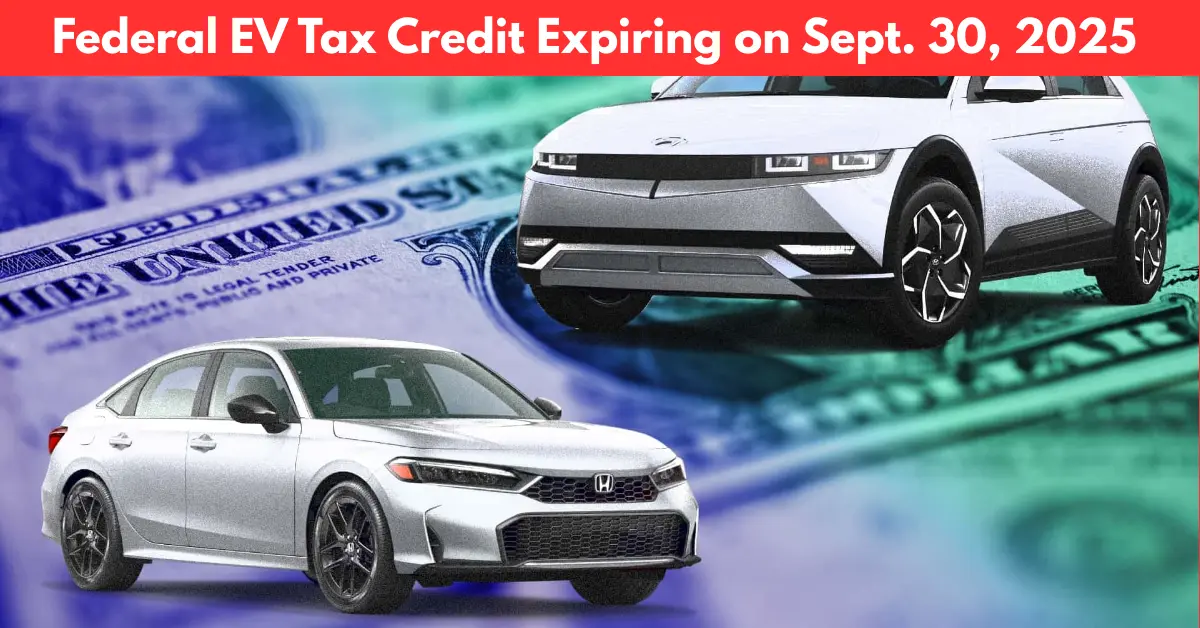
As the end-of-summer holiday car shopping season arrives, all the buyers have a rare and fleeting chance to score significant savings on electric cars and hybrids—especially as the federal EV tax credit is set to expire after September 30, 2025, following President Donald Trump’s “One Big Beautiful Bill Act.” This period is covering Labor Day weekend and all of September, is the “last call” for many of the best incentives in American car buying.
Federal EV Tax Credit: Final Weeks and the Written Contract Loophole
- Up to $7,500 for new EVs, $4,000 for used: Until September 30, eligible new electric vehicles(EVs) and hybrids can net buyers a major discount at the time of sale, directly reducing their purchase cost.
- Written Binding Contract: The IRS confirms that buyers can still claim this federal tax credit even if the vehicle is delivered after September 30—so long as they sign a written, binding contract and make at least one payment beforehand. This loophole applies even if delivery occurs in 2026, provided the sale agreement and payment are established by the deadline. Dealers are expected to use this rule to extend offers, so ask for a “time of sale report” when you buy.
- Eligibility: Not every vehicle qualifies—final assembly must be in North America, strict battery sourcing rules apply, and price/income caps persist. For new EVs, price limits are $80,000 for vans/SUVs/trucks and $55,000 otherwise; for used EVs, the car must be <$25,000, at least two years old, with lower income cutoffs.
Leasing: The Best Game in Town—for Now
- All leases qualify for the $7,500 credit: Leasing bypasses many consumer eligibility and vehicle build rules, allowing dealers to pass the savings to lessees regardless of tax filing status or origin of vehicle. This “leasing loophole” ends September 30, so manufacturers are pushing record-low lease rates to clear inventory.
- Compare carefully: Online lease deals (e.g., Hyundai Ioniq 5 SEL for $376/month vs. Kia EV6 for $456/month on a $50K car) may look cheap, but always factor in upfront costs and compute the true monthly payment. Put little or no money down to protect yourself if the car is totalled during the lease.
- Negotiate and get written quotes: Advertised numbers often lack taxes and local fees. Always confirm before signing.
Purchasing: Best for Hybrids, Plug-Ins, or Long-Term Ownership
- Hybrids offer lasting value: For those without access to home charging, plug-in hybrids and standard hybrids may be smarter buys than full EVs, especially given less-attractive lease deals.
- Example: The Honda Civic Hybrid, with an MSRP around $30,500, may be better purchased than leased—even if short-term. Honda’s strong residuals and reliability mean real value over three years, especially with dealers often discounting well-equipped trims.
Used Cars: Solid Value with or Without a Credit
- $4,000 used EV credit: Applies to cars <$25,000, at least 2 years old, and subject to income limits. Common picks: Chevy Bolt EV, Nissan Leaf, Tesla Model 3.
- Best overall value: Pre-owned sweet spot is $30,000–35,000, where depreciation delivers high-spec models for thousands less than new—think Mercedes EQE at under $33K, originally $70K+.
- Inspect pricing details: Request itemized quotes to check for extra fees or dealer add-ons. Compare specs, warranty, and “certified” benefits on similar models.
Car Shopping Strategy Before September 30
| Option | Credit Value | Deadline | Best For | Watch Out For |
|---|---|---|---|---|
| New Purchase | $7,500 max | Sep 30 (+ contract) | High earners, home charging | Strict battery/mfg/income caps |
| Lease | $7,500 all | Sep 30 | Low upfront cost, all buyers | Ends after Sep, negotiate terms |
| Used EV | $4,000 max | Sep 30 | Budget buyers | Price, age, income limits |
| Hybrid Buy | N/A | Any time | No home charger/long term | Credit not always available |
Pro Tips for Buyers
- Act before the deadline: Secure contracts and make payments by Sep 30 to ensure eligibility—even if you’ll take delivery later.
- Documentation: Ask for official “time of sale” paperwork and clarify whether your dealer handles the credit at point-of-sale or requires IRS filing.
- Compare offers: Use automatch services or sites like AutomatchConsulting.com to review deals and find value beyond your local area.
- Explore incentives: Check state, local, and utility programs for additional rebates, discounts, or perks on EVs, chargers, and hybrids.
Conclusion
With federal EV and used tax credits ending, and possible price hikes looming, this end-of-summer window is the prime moment for bargain hunters and eco-minded drivers to secure a deal—by buying, leasing, or even considering a gently used model. The key is to act fast, read the fine print, and leverage every available incentive for maximum savings.